February 24, 2026 — Qashabiya
The Art of Wool: How a Qashabiya is Made
From raw fleece to finished cloak — a journey through centuries of North African textile tradition.
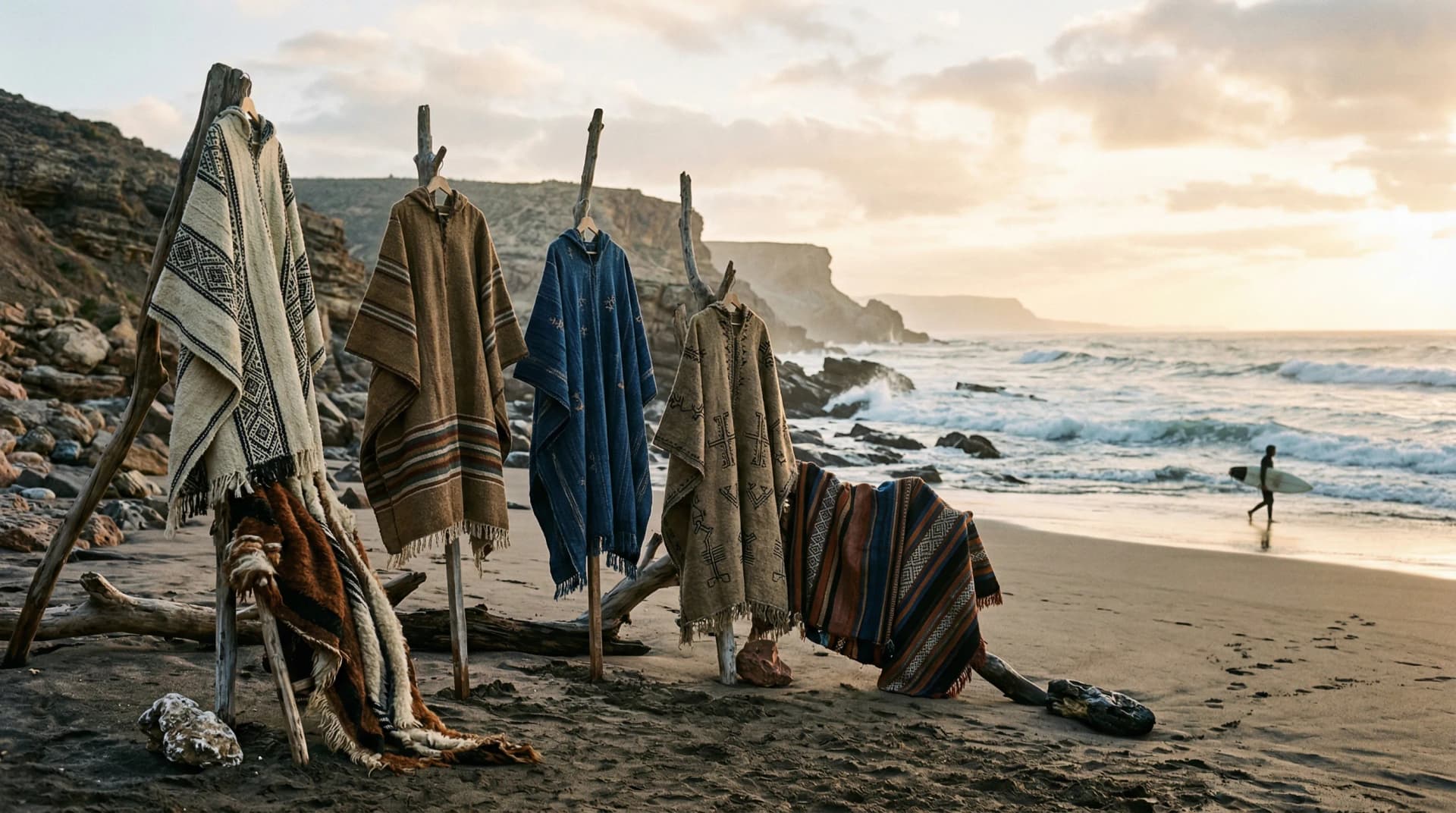
Every Qashabiya begins its life on the high plateaus of central Tunisia, where sheep graze on wild herbs and grasses that give their wool a unique character. The fleece is hand-sheared in spring, then cleaned and carded by the artisan families of Kairouan — a city renowned for its textile heritage since the 9th century.
The spinning is done by hand, using drop spindles that have remained unchanged for centuries. This slow process creates yarn with an irregular, organic quality that no machine can replicate. It's this imperfection that gives each cloak its unique texture and character.
Weaving happens on traditional wooden looms, with the artisan building the fabric row by row. A single cloak takes approximately three days of continuous weaving. The final step is fulling — a process of washing and agitating the woven fabric to create a denser, more wind-resistant material.
This is not fast fashion. This is fashion that has been perfected over a thousand years.